Did you know that the average elementary student loses one to two months of academic progress over summer break? It is called the "summer slide" -- and it is one of the most studied (and most preventable) patterns in education. If you are looking at the calendar wondering how to keep your child sharp without turning your living room into a classroom, you are asking the right question.
The good news: preventing summer learning loss does not require a curriculum, a tutor, or a packed schedule. The right approach blends light, consistent learning into the normal rhythm of summer fun. Daily reading, a weekly library visit, and one structured activity per week is enough for most children.
This guide gives you a research-backed look at the summer slide, the skills most vulnerable to regression, ten practical strategies you can start this week, and a sample weekly routine that keeps kids learning without losing the magic of summer.
What Is the Summer Slide? (And Is It Real?)
Summer learning loss -- often called the "summer slide" -- is the regression in academic skills children experience during extended school breaks. Researchers have been documenting it for decades, and while the size of the effect varies, the pattern is consistent.
A widely cited meta-analysis by Cooper and colleagues found that students lose, on average, about one month of math skills and two to three months of reading skills over summer break, with effects more pronounced for lower-income students. Research from Alexander and colleagues at Johns Hopkins suggests that by 5th grade, cumulative summer learning loss can account for as much as two-thirds of the achievement gap between higher- and lower-income students.
It is worth noting that some recent research, including work from the RAND Corporation, suggests the summer slide may be smaller than older studies indicated. Different assessment tools produce different estimates. But the broad consensus remains: most students experience some regression over summer, especially in math facts and reading fluency, and even modest summer activities prevent most of it. Your job is not to recreate the school year. It is to keep the engine warm.
Which Skills Are Most Vulnerable?
Not all skills decay equally. Understanding which areas are most at risk helps you focus your summer energy where it matters.
- Math facts and computational fluency. Practice decay hits hardest here. A child who could rattle off times tables in May may stumble in August without occasional rehearsal.
- Reading fluency and stamina. Especially for emerging readers (K-2), the ability to read smoothly and sustain attention through a longer text fades without daily practice.
- Spelling and writing conventions. Punctuation, capitalization, and spelling patterns rely on regular use.
- Foreign language exposure. For immersion or bilingual students, ten to twelve weeks without daily target-language input is the single biggest summer-slide risk.
- Less vulnerable: conceptual understanding, vocabulary, and problem-solving tend to stay intact -- these are built into how children think, not stored as practiced routines.
The takeaway: a little daily practice in the vulnerable areas goes a long way. You do not have to cover everything.
10 Research-Backed Ways to Prevent Summer Learning Loss
These strategies are drawn from established research and from what actually works in real family schedules. None require special materials. Most are free.
- Read every day -- 15 to 30 minutes. This is the single most effective summer-slide intervention. Free choice, comic books, audiobooks, magazines -- all count.
- Visit the library weekly. Most public libraries run free summer reading challenges with small prizes for hitting milestones. The structure does half the work for you.
- Make math part of daily life. Measure ingredients while baking, count change at the store, split pizza into fractions, calculate travel times on road trips. Math lives outside worksheets.
- Write something every day. A journal sentence, a postcard to a grandparent, a thank-you note, a story about the day's adventure. Volume matters more than perfection.
- Choose one summer camp with academic enrichment. Language immersion camp, STEM camp, nature camp, art camp -- one structured week of focused engagement protects against weeks of drift.
- Keep screen time balanced. Educational shows and apps have a place, but in small doses. Default screens crowd out the unstructured time where most learning happens.
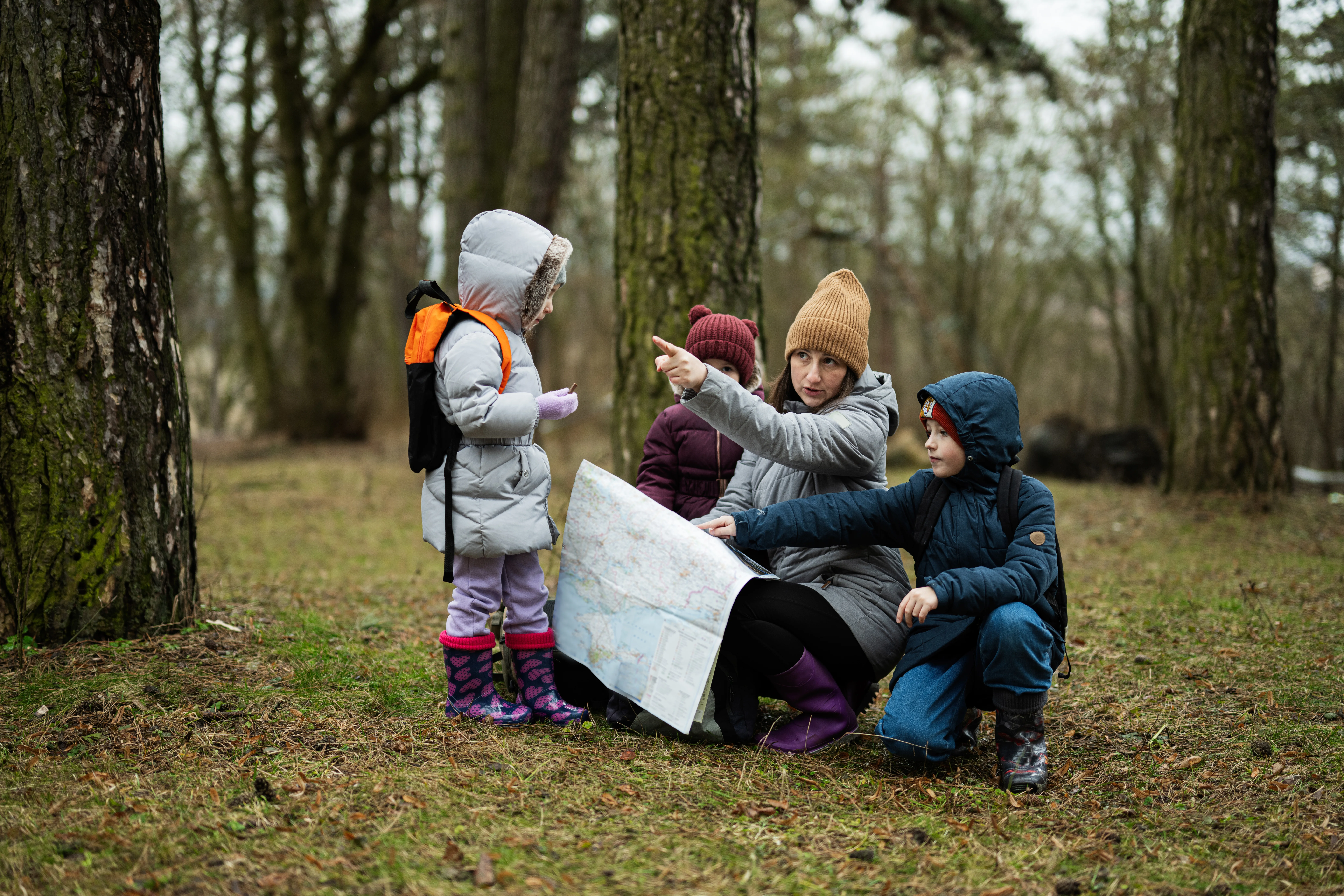
- Travel -- even a day trip. Novel experiences build vocabulary and background knowledge. A museum, a trail, a town you have never visited -- all count as learning.
- Cook together. Recipes are reading, measuring, sequencing, and chemistry rolled into one activity. Pick one new recipe a week and let your child lead.
- Maintain target-language exposure. For bilingual or immersion students, daily Spanish (or other target-language) input -- through books, music, video, or conversation -- prevents language-specific regression.
- Establish a loose summer routine. Ten to fifteen minutes of "learning time" most mornings keeps the habit intact. Predictable beats heavy.
Consistency beats intensity. A child who reads 20 minutes a day for ten weeks gets more benefit than one who does a two-hour academic boot camp in August.
A Sample Weekly Summer Routine (Low-Effort, High-Impact)
If you want a starting template, try this. Adjust to your family's pace -- the schedule is the suggestion, not the rule.
- Monday: Library visit + 30 minutes of independent reading
- Tuesday: Cooking together with measurement (math + reading)
- Wednesday: Outdoor exploration (park, trail, or backyard) + a short journal entry
- Thursday: Math game or puzzle (15 minutes) + reading
- Friday: Creative project -- writing, art, or building something
- Saturday/Sunday: Family activity day -- a trip, a project, or downtime
- Daily: 20 to 30 minutes of independent reading at any point
Total commitment: roughly 30 to 45 minutes a day of light learning blended with normal summer life. That is enough to keep nearly every child off the slide.
Should You Send Your Child to Summer Camp?
Summer camps can do a lot of the work for you. The benefits go beyond academics -- structured social interaction, exposure to new adults and peers, embedded learning through play, and a predictable rhythm in a season that can otherwise feel formless.
When evaluating camps, look for programs that explicitly include academic, language, or enrichment goals. A camp that is just supervised play has its own value, but it will not protect against the summer slide the way an enrichment camp will.
For families with immersion students, a Spanish immersion summer camp is especially valuable. Programs like Camp Alegria at Casita Azul (Spanish Horizons Academy's sister school) keep children in a Spanish-rich environment through the summer -- preventing both general and language-specific summer slide in one program. For a deeper look at how to evaluate immersion summer camps, see our [April guide to Spanish immersion summer camps].
Special Note for Immersion Families: Preventing Spanish Slide
For students at Spanish Horizons Academy or any immersion school, summer is a critical exposure gap. Ten to twelve weeks without daily Spanish input can produce measurable regression in receptive and productive language skills -- especially for younger students who are still building their foundation.
The fix is not full-time Spanish school. It is consistent, low-pressure exposure throughout the summer.
- Spanish-language books from the library. Many library systems have strong Spanish children's sections; ask the librarian for recommendations.
- Spanish-language shows on streaming services. A daily 20-minute Spanish-language episode keeps the ear tuned and vocabulary fresh.
- Spanish music in the car. Background exposure during commutes adds up to dozens of hours over a summer.
- Cooking from Latin American cookbooks (in Spanish). Pairs language with hands-on activity.
- A Spanish immersion summer camp. Camp Alegria, run by Casita Azul, is built specifically for this gap.
- Spanish-speaking playdates or family connections. Even one hour a week of real conversational use is high-quality input.
The principle is the same as for the general summer slide: a little, consistently, beats a lot, occasionally.
Frequently Asked Questions
Is summer learning loss real? Yes. Research consistently shows students lose academic skills over summer break, especially in math facts and reading fluency. The exact amount varies by study and student, but most children experience some regression. The encouraging part: even modest summer activities -- daily reading, weekly library visits, embedded learning -- prevent most of it.
How much learning is lost over the summer? Studies estimate students lose one to three months of academic progress over a typical summer break, with reading and math facts most affected. The loss is cumulative, meaning small annual setbacks compound through elementary school -- which is why preventing summer slide matters beyond any single year.
How can I prevent the summer slide? The two most effective strategies are daily reading (15 to 30 minutes) and embedding learning in everyday activities like cooking, travel, and library visits. Summer camps with academic or language enrichment also help. You do not need a curriculum. Consistency beats intensity.
Do bilingual students lose language skills over summer? Yes. Bilingual and immersion students can lose target-language fluency without continued exposure, especially in the early grades when language is still being built. Daily Spanish reading, media, music, and language-focused summer camps (like Camp Alegria) help prevent this language-specific summer slide.
Summer Is for Play -- And a Little Learning Goes a Long Way
The summer slide is real, but it is also one of the most preventable patterns in education. A library card, a daily reading habit, and one structured activity per week is enough for most children. You do not need a curriculum, a tutor, or a packed calendar.
Summer is for play, rest, and family time -- not a second school year. Light, consistent learning blended into normal summer life beats intense, sporadic effort every time. The fact that you are reading this article and thinking about your child's summer means you are already doing the most important thing: paying attention.
If you are looking for a summer experience that prevents both academic and language slide for your immersion student, explore Camp Alegria at Casita Azul (our sister school in Portland) or reach out to Spanish Horizons Academy about summer enrichment options. We are happy to help you plan a summer that keeps your child engaged without losing the magic of the season.
[CTA: Schedule a Tour at Spanish Horizons Academy]
[Internal Link: Spanish Immersion Summer Camp -> /blog/spanish-immersion-summer-camp] [Internal Link: Raising a Bilingual Child -> /blog/raising-a-bilingual-child] [Internal Link: Kindergarten Readiness Guide -> /blog/kindergarten-readiness-guide] [Internal Link: What Is a Spanish Immersion School -> /blog/what-is-a-spanish-immersion-school] [Internal Link: Spanish Horizons Academy Programs -> /programs] [Internal Link: Schedule a Tour -> /admissions] [Internal Link: Camp Alegria at Casita Azul -> casitaazulpdx.com/camp-alegria]